Overview & identification
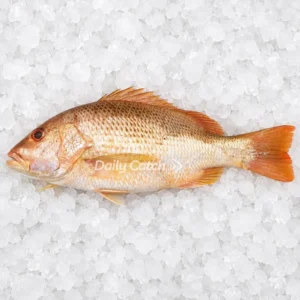
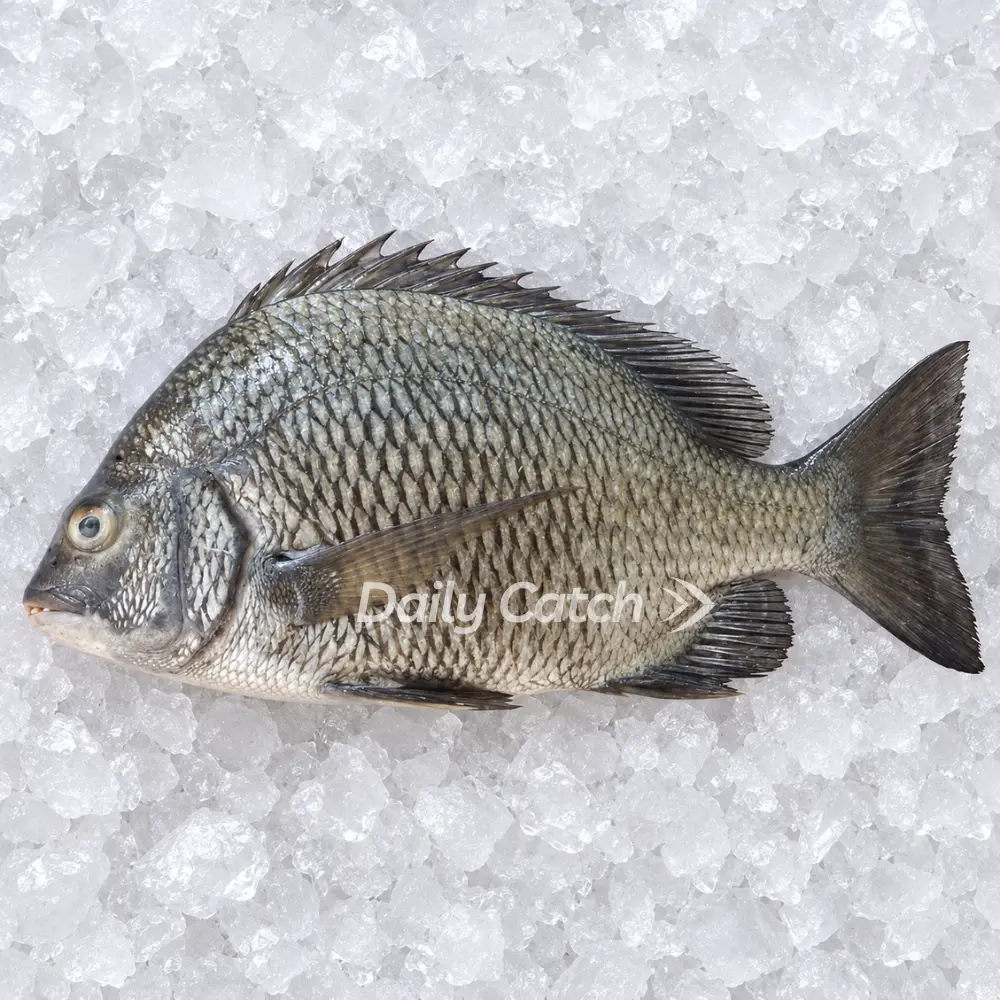
Goldsilk Seabream, known locally as Kala Dandia (کالا دندیا), is Acanthopagrus berda of the family Sparidae, order Perciformes, class Actinopterygii and phylum Chordata. It is among the finest bream species landed from the Arabian Sea, and runs noticeably larger than Yellowfin Seabream. You can tell the two apart by colour and build: Kala Dandia has a robust oval body, darker-toned scales and a distinctive golden-silver sheen along its sides, with a larger head and greater body thickness that translate directly into higher meat yield. It thrives in shallow water, estuaries and coastal zones across the Arabian Sea and Indo-Pacific, particularly near mangroves and muddy seabeds, and holds a stable population along the Pakistani coast. We source it through sustainable net fishing with trusted coastal partners.
Flavor & texture
Kala Dandia delivers a stronger, fuller taste than Yellowfin Seabream, with firm yet juicy white meat that flakes cleanly. The critical quality for cooking is that it retains moisture under heat rather than drying out, which is exactly why it has become the fish of choice at the BBQ stalls and seafood grills around Kemari. Its deeper umami notes stand up to assertive seasoning instead of being buried by it, and the slightly thicker fillets absorb marinades well and hold their shape over an open flame. If you are grilling rather than gently poaching, this is one of the most reliable fish in the range.
Sizing, cutting & yield
Fish run from 200 to 500 g each, with the size depending on your preference and seasonal availability. All prices are based on weight before cutting. Approximate yields are 100% whole and uncleaned, 85% whole and gutted, 70% headless and gutted, 60% slices, and 38% fillet. Given the firm meat and moderate bone content, we recommend whole and gutted for most customers — it gives the best results for frying and grilling while keeping 85% of the weight you paid for, whereas filleting a fish this size sacrifices well over half of it. Fillet and slice cuts remain available if you specifically want boneless portions.
Cooking & health benefits
This is a grilling fish first and foremost. The thick white meat stays moist and intact over coals, making it ideal for BBQ, frying and curries alike, and it also works in fillet-based and oven-baked dishes. Marinate it with lemon, garlic, red masala or a green chutney paste for a bold desi flavor. Nutritionally it is rich in lean protein, vitamin B12 and Omega-3 fatty acids, supporting cardiovascular health, muscle growth and brain development. Its mineral profile — phosphorus, selenium and potassium — helps strengthen bones and support immunity, making it a strong fit for low-fat, high-nutrition everyday eating.