Overview & identification
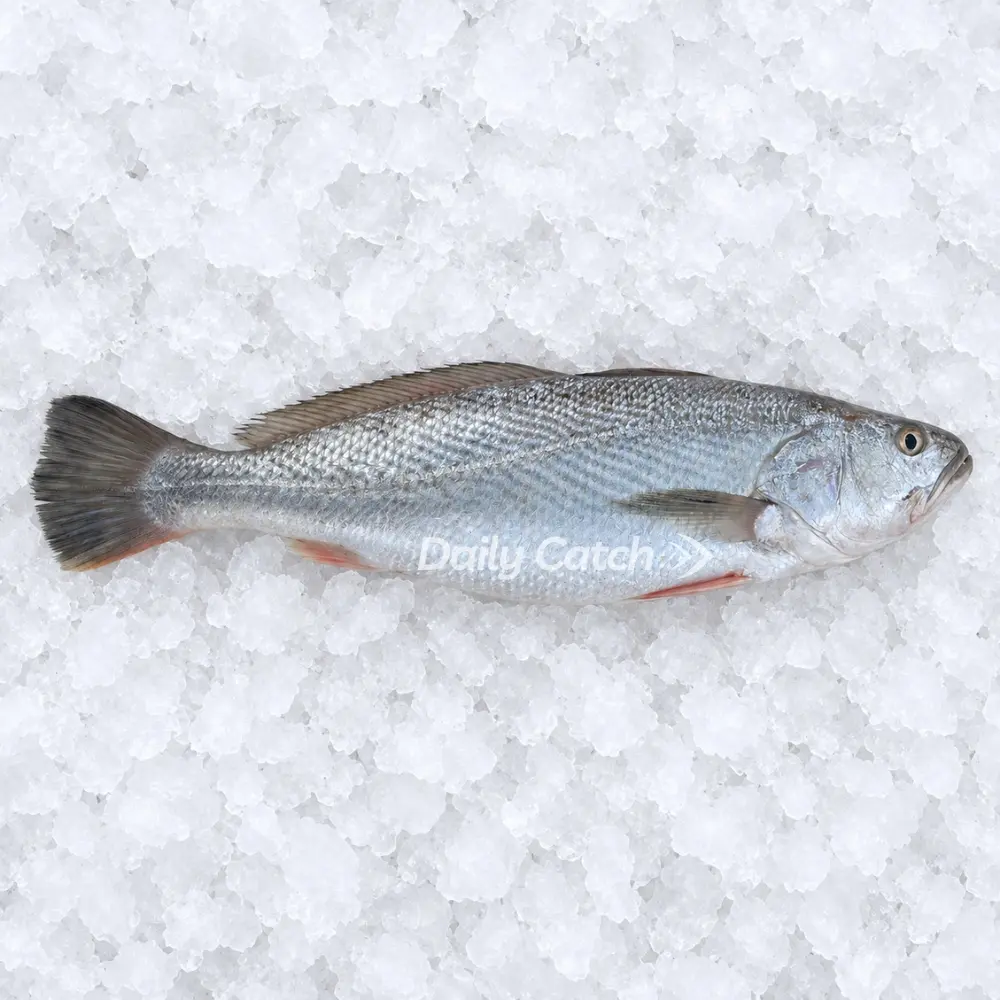
Tigertooth Croaker, known locally as Mushka (مشکا), is Otolithes ruber of the family Sciaenidae, order Acanthuriformes, class Actinopterygii and phylum Chordata. It is a medium-sized fish with a streamlined, elongated body and silver-grey scales that often carry a distinct golden hue. Among the most abundant species in the Arabian Sea, it thrives in shallow coastal waters, estuaries and river mouths, preferring warm tropical conditions near muddy and sandy sea bottoms where it feeds on smaller fish and crustaceans. Compared with other croakers it stands out for softer, more flavourful flesh, and it has been a household staple across generations thanks to its affordability and year-round availability. We catch it using gill nets and handline fishing.
Flavor & texture
Mushka offers a delicate, mild flavor with a slightly sweet edge and soft, flaky white flesh that is notably low in bones. That combination makes it one of the easiest fish to serve to a mixed table — children and older family members both manage it comfortably, which is a large part of why it has stayed in Pakistani kitchens for so long. It absorbs spices exceptionally well, so it is at its best carrying a masala rather than standing alone. The tenderness does mean it wants a lighter hand than firmer fish; it suits frying, steaming and baking better than long, vigorous cooking.
Sizing, cutting & yield
Mushka comes in three size grades: small at 250 to 400 g, medium at 400 to 700 g, and large at 700 g to 1 kg, so there is a size to suit anything from a small family meal to a larger gathering. All prices are based on weight before cutting. You can order whole, gutted, headless, sliced or boneless. Approximate yields are 100% whole and uncleaned, 80% whole and gutted, 70% headless and gutted, 65% slices, and 35% boneless. For most customers we recommend the headless and gutted cut — it balances convenience against yield well and presents nicely for everyday meals and occasions alike.
Cooking & health benefits
Mushka is a staple of Pakistani and South Asian kitchens and adapts to almost any method: deep frying, pan-searing, grilling, steaming and baking all work. Its mild meat pairs beautifully with spicy marinades, traditional masalas and lemon-herb seasonings, making it as suitable for a quick weekday dinner as for a festive family recipe. Nutritionally it is packed with lean protein for muscle repair, and rich in Omega-3 fatty acids that support heart health and reduce inflammation. Its low fat content fits comfortably into a balanced everyday diet, and it supplies vitamins and minerals that support brain function and immunity.